
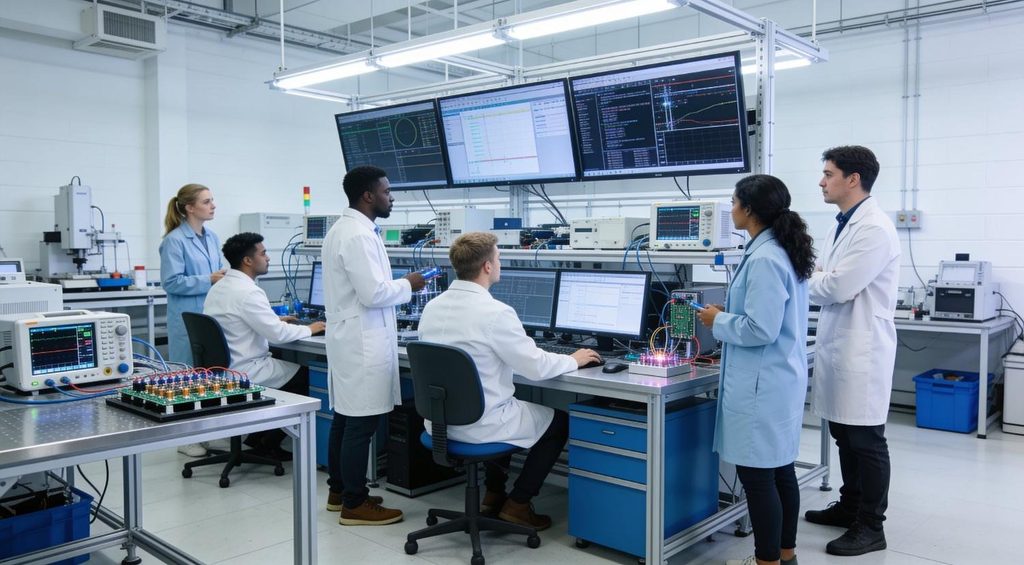
Scientific research has changed dramatically over the past decade. Laboratories no longer rely solely on notebooks, spreadsheets, and manual inventory checks. Instead, digital technologies have become central to nearly every stage of the research process, from planning experiments to managing supplies and analysing results. These improvements are helping research teams work more efficiently while reducing errors that can slow scientific progress.
As research projects become increasingly collaborative and data intensive, laboratories need systems that keep information organised, accessible, and secure. Digital infrastructure now supports everything from equipment scheduling to cloud-based data sharing, creating environments where scientists can focus more on discovery and less on administration.
Digital Systems Reduce Complexity Across Research Projects
Modern laboratories often manage hundreds or even thousands of samples, chemicals, and specialised materials simultaneously. Without effective digital tools, tracking these resources quickly becomes difficult, particularly when multiple researchers are working on overlapping projects.
Laboratory Information Management Systems (LIMS), inventory software, and cloud databases make it possible to monitor stock levels, record experimental data, and maintain complete documentation throughout a project’s lifecycle. These systems also improve collaboration between institutions by allowing authorised researchers to access the same information regardless of location.
Digital procurement has become equally important. Research teams increasingly source specialised materials, including antibodies, enzymes, and peptides, through suppliers that provide detailed product documentation, batch information, and quality specifications. Having accurate digital records for these materials improves traceability and supports more consistent experimental workflows.
Better Data Means More Reliable Science
Collecting data is only one part of scientific research. Ensuring that information remains accurate, searchable, and reproducible is equally important.
Cloud platforms now allow researchers to store large experimental datasets securely while maintaining detailed version histories. This makes it easier to review previous experiments, identify trends, and verify results months or even years after data collection.
Digital documentation also simplifies regulatory compliance by creating transparent audit trails that record when experiments were performed, who modified datasets, and which materials were used. These capabilities reduce administrative burdens while strengthening confidence in research outcomes.
Automation Is Improving Laboratory Efficiency
Many repetitive laboratory tasks are now supported by automation. Robotic liquid handlers, automated sample storage systems, and digital scheduling platforms reduce manual workloads while improving consistency across experiments.
Automation also helps laboratories make better use of expensive equipment. Digital booking systems minimise scheduling conflicts and allow researchers to monitor instrument availability in real time, reducing downtime and increasing productivity.
Beyond hardware, software automation is transforming administrative processes as well. Inventory alerts, purchasing approvals, and quality control documentation can now be generated automatically, allowing research teams to spend more time on scientific work rather than routine paperwork.
Digital Standards Support Research Quality
Technology alone does not guarantee better science. Effective digital infrastructure depends on consistent standards for managing information, protecting data, and maintaining documentation.
The National Institute of Standards and Technology (NIST) has published extensive guidance on cybersecurity, data integrity, and digital risk management that many research organisations use when developing secure information systems. Applying recognised standards helps laboratories protect valuable research while supporting collaboration across institutions.
Standardised digital practices also make it easier to reproduce experiments because researchers can review complete records rather than relying on incomplete notes or fragmented documentation.
Collaboration Has Become Easier Than Ever
Scientific breakthroughs increasingly involve multidisciplinary teams spread across universities, hospitals, research institutes, and private organisations. Digital collaboration tools have made these partnerships significantly more efficient.
Researchers can now review experimental data together, share protocols, comment on results, and coordinate projects without needing to work from the same physical location. Cloud storage, secure communication platforms, and integrated project management software have shortened decision-making cycles while reducing duplication of effort.
These technologies proved particularly valuable during recent years when many research organisations adopted remote and hybrid working models. The ability to maintain research continuity through digital platforms has demonstrated how essential robust infrastructure has become.
Procurement Is Becoming More Transparent
Digital transformation extends beyond laboratory operations into supply chain management. Researchers increasingly expect suppliers to provide comprehensive online documentation, including certificates of analysis, technical specifications, product availability, and ordering history.
Greater transparency helps laboratories compare materials more effectively while simplifying procurement decisions. Digital catalogues also reduce administrative overhead by integrating directly with purchasing systems and inventory databases, allowing research teams to monitor stock levels and reorder essential materials before shortages interrupt ongoing studies.
This level of visibility supports better planning, particularly for long-term research projects involving specialised laboratory reagents and research compounds.
Preparing Laboratories for the Future
Artificial intelligence, predictive analytics, and connected laboratory equipment will continue reshaping scientific research over the coming years. Future laboratories are likely to rely even more heavily on integrated digital ecosystems that combine inventory management, experiment tracking, data analysis, and collaborative tools within unified platforms.
Organisations investing in strong digital infrastructure today will be better positioned to adapt as research technologies continue evolving. While scientific expertise remains the foundation of every discovery, efficient digital systems increasingly provide the framework that allows researchers to work faster, collaborate more effectively, and maintain the high standards expected in modern science.
As laboratories continue embracing digital transformation, the combination of intelligent infrastructure, transparent procurement, secure data management, and collaborative technologies will play an increasingly important role in supporting reliable, reproducible, and innovative scientific research.